
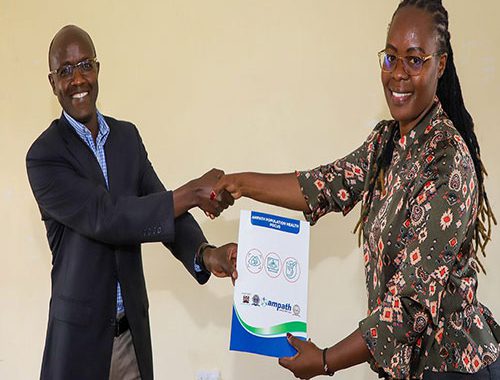
AMPATH Takes the Lead in Point of Care Ultrasound Education and Care Integration in Western Kenya

In order to improve AMPATH’s patient-centered primary care, Moi University and AMPATH Kenya have secured a new 4-year funding that will teach local leadership in six counties in western Kenya in the use of portable point-of-care ultrasounds (POCUS). Panorama Global is providing support for the initiative, which is funded by Novartis, Eli Lilly and Company and MSD through its MSD for Mothers program.

POCUS is a tool used by clinicians and healthcare professionals to capture rapid, in-the-moment images within the body, frequently at the patient’s bedside. It assists the medical professional in responding to particular queries, such whether the heart is beating appropriately or whether the baby is positioned correctly in the womb. In addition to the physical examination, this technology provides medical professionals with more instant information to help them make treatment decisions.

24 healthcare professionals were trained at Webuye County Hospital in Bungoma County, the first of six POCUS Innovation Centres, as part of the project’s January 13, 2025 launch. Ten sub-county trainings for 670 healthcare workers in Bungoma County will follow this one. A total of 190 probes will be dispersed among nearby rural medical clinics.

One of the principal investigators (PIs) for the $6.5 million USD grant, Dr. Hussein Elias, a lecturer in the Moi University Department of Family Medicine, Medical Education and Community Health, stated that POCUS empowers medical professionals to see and identify conditions like heart failure, breast cancer and certain obstetrical complications earlier and increases the likelihood of better treatment and survival.

In low and middle-income nations like Kenya, diagnostic imaging is not easily accessible in settings with limited resources, especially in rural areas like western Kenya. To make diagnoses, medical professionals must instead rely on their knowledge of physical examination techniques and the patient’s medical history. In cases where early discovery might significantly improve outcomes, such as breast cancer, heart failure and more complex problems during pregnancy, this is not always enough. With a portable, handheld device, POCUS enables healthcare professionals to rapidly assess conditions in places with limited access to cutting-edge medical facilities. This can result in quicker treatment, less travel time for patients to hospitals, and even save lives by identifying serious problems early.

“These healthcare professionals can detect life-threatening conditions earlier, increasing the chances for earlier treatment and survival, by using POCUS to assess cardiac function, identify specific pregnancy complications, or a suspicious mass in the breast,” added Daria Szkwarko, DO, MPH, Co-PI on the grant and associate professor in Family Medicine at the Warren Alpert Medical School of Brown University.

Building on the Kenyan Ministry of Health’s primary care network model, the project will establish ‘POCUS innovation centres’ at primary care network hubs to train and mentor 4000 healthcare workers in the use of POCUS in collaboration with the Global Ultrasound Institute (GUSI), a global leader in POCUS education.

This project, which will be implemented quickly in the first year in Bungoma County, will focus on obstetrical complications in pregnant women as well as identifying heart failure in patients with diabetes and/or hypertension who are symptomatic and identifying potentially malignant breast masses in patients who present with breast lumps.

“We expect that over half a million patients will have point-of-care ultrasounds in facilities with limited on-site access to diagnostic imaging over the course of four years,” Dr. Elias continued.

In Kenya and other resource-constrained environments in low- and middle-income nations across the world, the outcomes of the grant activities will guide the national POCUS rollout. According to Dr. Szkwarko, “the project includes a research component to evaluate the integrated hub approach for POCUS implementation by assessing its impact on the training and supervision of healthcare workers, delivery of patient care, and health outcomes, in addition to improving patient care and treatment plans.”

Tanzania Fortifies Emergency Healthcare Facilities Through a Strategic Partnership

Through smart public-private partnerships, the Tanzanian government, led by President Samia Suluhu Hassan, plans to speed up efforts for improving emergency healthcare services.

Through this program, citizens’ needs will be promptly met and emergency services will be made available with high quality.

Speaking on behalf of Regional Commissioner Albert Chalamila, Dar es Salaam Regional Chief Medical Officer Dr. Mohamed Manguna pointed out the government’s commitment to strengthening emergency healthcare systems during the formal closing of the first phase of the Improving Emergency Care in Tanzania (IMECT) project.

According to him, the 1.8 billion dollar IMECT project is a prime example of a cooperation that has brought together the Tanzanian government, foreign partners and local people to improve emergency medical services throughout the nation.

Dr. Manguna acknowledged Aga Khan Health Services Tanzania (AKHST) and the Polish government for their crucial contributions to the project’s execution.

Through the Polish International Assistance Centre (PCPM), Poland has provided US dollars 760, 000 (1.8 billion) to Tanzania’s emergency healthcare infrastructure during the last two and a half years.

He praised the partnership as an important step in filling in the deficiencies in the nation’s healthcare system, such as a lack of facilities, qualified staff and resources.

Dr. Manguna acknowledged the improvements but pointed out that there are still obstacles to overcome before all medical institutions have the infrastructure, employees and resources needed to deliver quality emergency care.

He commended Aga Khan Health Services for their contribution in advancing the public-private partnership model and for their leadership in backing government initiatives to fortify healthcare systems.

Nakuru County Uses Technology to Provide Better Healthcare Services

A digital revolution has transformed health-care service delivery in Nakuru County, bringing in a new era of efficiency and openness.

Ms Roselyn Mungai, County Executive Committee Member (CECM) for Health Services, highlighted that the divided unit’s administration has implemented cutting-edge digital technologies in all health-care operations in order to leverage technology for better governance.

“From electronic health records to automated appointment scheduling, the county administration is successfully implementing digitised health systems that simplify patient care, record keeping on patients and availability of drug stocks and overall health care management,” highlighted by the county’s CECM.

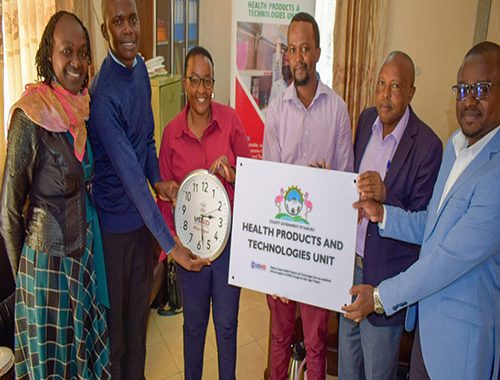
Ms Mungai, who received computers, accessories and cabling from the United States Agency for International Development (USAID) Tujenge Jamii programme to support the ongoing digitisation of health service delivery in Nakuru, stated that paperless technology has not only increased medical practitioners efficiency but has also significantly improved patient experience.

“This contribution will enhance Governor Susan Kihika’s administration and commitment to enhance efficiency, improve data management and streamline service delivery across beneficiary health care facilities,” the CECM stated.

The CECM stated that real-time data access enables health professionals to make informed decisions quickly, resulting in more efficient health care delivery in all public hospitals.

She also stated that Nakuru County has started moving to an electronic Community Health Information System (eCHIS) to support community health promoters’ (CHPs) activities.

She claimed that over 2,000 CHPs will use the devices to help with household registration, patient screening, treatment and referrals, as well as to advocate for primary health practices.

The Electronic Community Health Information System (eCHIS) is a national project started by the Ministry of Health a year ago. It consists of a SmartHealth Mobile Phone application developed on Medic’s Community Health Toolkit platform.

The USAID Country Health Information Systems and Data Use (CHISU) program contributes to Kenya’s digital health transformation by enhancing and strengthening the technology, software and information systems used by the Ministry of Health and all health-care workers to provide more affordable, high-quality services.

This includes teaching healthcare personnel how to gather, analyse, and apply data using standardised, unified systems, allowing them to make data-driven decisions about enhancing patient care.

Ms Mungai realised that the analogue system was costly for the county government, making data susceptible and data might easily be destroyed. According to the official, the digitised method makes data submission simple, traceable and reliable.

With technology, patients at the grassroots level can connect virtually with healthcare providers, avoiding the costs and inconveniences associated with travel while also ensuring that accurate records are retained.

In order to improve speed of response, the county government uses the data gathered by the “Medical Social Work Service Register” system to create policies and take action, such as sending out alerts about illness outbreaks.

The CECM claims that the e-register helps doctors and healthcare administrators to conveniently handle medication, medical billing and appointment scheduling. It also supports the Kenya Health Information System (KHIS) register at the national and county levels. It also provides improved rules for insurance and healthcare programs.

Additionally, the Medical Social Work Service Register is an online database that provides sub-county-level statistics on disease burden by region and type. Similarly, there are medical magazine publications that are specialised and contain a wealth of information about different disease loads.

Technology is important for Kenya’s efforts to get universal health care, according to Ms. Mungai.

She stated that “one of the major milestones that will push Kenya and Africa firmly into the future will be technology.”

Residents were assured by Ms. Mungai that the digital health system was created to ensure the privacy and security of their data.

“The primary priority is privacy and we always make sure to follow the regulations set forth by the government, specifically the Data Protection Act. The patient is the main focus and grants permission to anybody who has access to their digital files.” The CECM stated.