
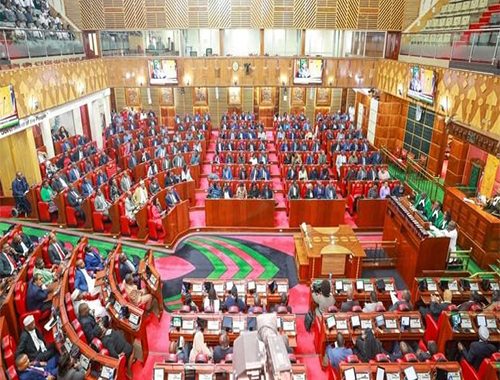
The Traditional and Alternative Medicine Practitioners Bill, 2026, which aims to formalize and regulate Kenya’s traditional medicine industry through an organized legal and institutional framework, is being reviewed by the Budget and Appropriations Committee.
The Bill, which is being supported by Endebess MP Robert Pukose, calls for the establishment of a Council of Traditional and Alternative Medicine Practitioners to supervise standards enforcement, training, licensing, and accreditation.
The act also regulates the quality, safety, and marketing of herbal products according to national and international standards.
Pukose informed the Committee that the purpose of the legislation is to guarantee that indigenous knowledge benefits practitioners and the nation.
“This bill aims to safeguard indigenous knowledge and guarantee that practitioners and the nation profit from their inventions and resources,” he stated.
A governing board tasked with registering and licensing practitioners in the fields of traditional and alternative medicine is outlined in the bill. Additionally, it offers training, accreditation, and oversight of adherence to established standards.
Committee members highlighted that the framework’s goal is to bring structure to an industry that primarily functions informally. Provisions for quality assurance, safety monitoring, and control over the creation and marketing of herbal products are also included in the plan.
It is anticipated that the regulatory structure will introduce formal oversight mechanisms for practitioners and bring traditional medicine practice into compliance with current health sector norms. Members evaluated the Bill’s regulatory scope and implementation structure, while Committee Chair Naisula Lesuuda emphasized the policy foundation supporting the bill.
The necessity of organized procedures and conformity to national health policy was emphasized by Florence Jematia. Formalization, according to Christopher Aseka, could help standardize herbal remedies and increase economic prospects, especially in rural areas where a large number of practitioners work.
The estimated 40,000 traditional medicine practitioners in Kenya, many of whom offer primary healthcare services informally throughout the nation, were also mentioned by lawmakers.
The Bill is a part of larger government initiatives to incorporate integrative, complementary, and traditional medicine into the country’s healthcare system. Frameworks for research cooperation, practitioner accreditation, and product control under pertinent health bodies are among the current standardized policies.
The proposed law aims to bring Kenya into line with nations like Tanzania and India, where traditional medicine has been incorporated into professional healthcare systems in accordance with regulations.
Budget and Appropriations Committee is expected to finalize its recommendations and submit a report to the National Assembly for discussion.