
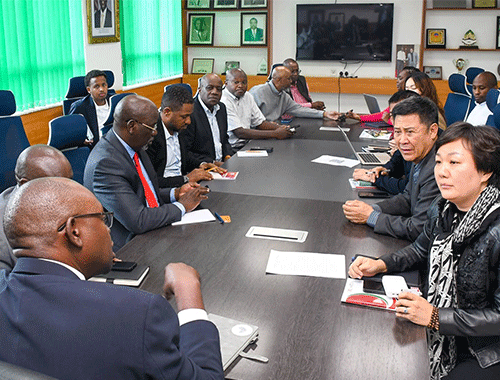
Kenya and Belgium are strengthening their health partnership through collaborative investments in healthcare infrastructure, medical research, and biotechnology. The initiative aims to reinforce Kenya’s healthcare system while accelerating the country’s progress toward achieving Universal Health Coverage (UHC).
The strengthened partnership comes after high-level discussions between officials from Kenya’s Ministry of Health and Belgian Ambassador to Kenya Peter Maddens. During the talks, both parties reaffirmed their commitment to increasing financial support, enhancing technical assistance, and promoting technology transfer initiatives to improve healthcare services across the country
Central to the partnership is the creation of the KEMRI–Unizima Bio-Manufacturing Training Hub, a collaborative project between the Kenya Medical Research Institute (KEMRI) and Belgian biotechnology company Unizima.
The initiative seeks to strengthen Kenya’s capacity to conduct local research, develop, and manufacture essential medicines and biopharmaceutical products. It is also expected to reduce the country’s dependence on imports while enhancing its preparedness to respond to future public health emergencies.
Once operational, the facility will be capable of producing vaccines, insulin, cancer treatments, and other biotherapeutic products. It is also expected to serve as a regional hub for biomedical innovation and pharmaceutical research.
The partnership will also support the training of Kenyan biomedical scientists, laboratory technologists, and technical professionals through specialized exchange programmes in Belgium. These programmes will equip participants with advanced skills in biotechnology, pharmaceutical manufacturing, and laboratory quality management systems, enabling them to apply and share the expertise within Kenyan institutions.
Health officials say the initiative will help develop a highly skilled workforce capable of supporting the growth of Kenya’s pharmaceutical sector while positioning the country as a regional centre for medical manufacturing.
In addition, Kenya and Belgium are partnering to strengthen environmental health through the implementation of the Medical Waste Microwave Project. Backed by the Belgian government, the initiative aims to modernize the management and disposal of hazardous medical waste.
The project introduces advanced microwave treatment technology to replace conventional open-air incineration methods, helping to reduce environmental pollution, cut greenhouse gas emissions, and lower the risk of infections linked to the improper disposal of medical waste.
The initial phase of the programme has already been rolled out in key referral hospitals, including Kenyatta National Hospital and Moi Teaching and Referral Hospital, along with health facilities in Kakamega, Kisumu, Mombasa, Nakuru, Embu, Nyeri, Machakos, and Kisii.
Following the successful rollout of the second phase across 22 counties, Kenya and Belgium have signed an Inter-Party Participating Agreement (IPA) to implement the third phase of the programme, which will extend modern medical waste treatment systems to all 47 counties.
The nationwide rollout is expected to strengthen infection prevention and control, boost environmental protection, and improve the overall quality of healthcare services across both urban and rural health facilities.
The collaboration is also expected to support Kenya’s wider objective of strengthening local pharmaceutical production, enhancing access to affordable medicines, and positioning the country as a regional leader in health research and biotechnology across East Africa.