
Kijenzi aims to improve health care in Africa through 3D printing

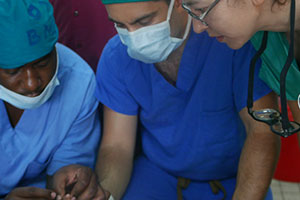
Kijenzi engineer Alenna Beroza, is developing solutions to deliver medical equipment using a surprising method — 3D printing.
There has been certain huge challenges in bringing health care to those in need like broken machinery, outdated supply chains and a limited access to specialty equipment and these challenges leaves Kenyan clinics with various critical challenges and therefore Kijenzi is hoping to change that.

Kijenzi, who are grown in the Penn State College of Engineering, Kijenzi’s original intention was to create an easily moveable 3D printer to quickly produce health equipment like braces, clamps and vacuum pumps at low cost.

By working in the Kenyan community, the inventors soon become fully aware that the lack of 3D printers wasn’t the problem. What was really required was entrance to the CAD design files needed to print the equipment.
This changed the teams’s aim and focus from printing to developing a system that allows hospitals to have permission to these files and to trained people to print the parts.

Clinics in Kenya using the Kijenzi system can now produce or “print” the equipment and instrument they need and when they need it.

Director of the Penn State Humanitarian Engineering and Social Entrepreneurship (HESE) program and the co-founder of Kijenzi, John K. Gershenson, said, “Our customers are health care facilities that don’t have permission to the supply chains they require and over 40 percent don’t have the instrument needed to operate their patients. We bring the potential to locally manufacture what they need and when they need it. That is a game changer for permit to treatment.”

The Kijenzi venture team is using Penn State knowledge and expertise to bring 3D printing to rural Kenyan health care facilities. 3D printing can help these facilities manufacture and produce hard-to-get items like anatomical models, replacement parts, and job-related therapy devices.

The Kijenzi system has the ability and capability to impact many people lacking permit to necessary medical equipment in Kenya and around the globe.
Kijenzi has already had requests for nearly 400 different parts in its system. It has broad-reaching suggestions for medical education and other institutional uses as well.

After consequential testing and merging, Kijenzi is now preparing to launch an beginning program (its MVP) in Kenya this May.
TANZANIANS will soon start accessing new health insurance packages

National Health Insurance Fund (NHIT) to announce Health Insurance Packages soon.
The fund announced last year that it would launch new health scheme packages that would allow more people to join the health scheme depending on their financial capability.
This scheme is designed by the National Health Insurance Fund (NHIF).

Angela Mziray, NHIF Public Relations Manager, told the ‘Sunday News’ at the weekend that the process was in an advanced stage and it was expected to be closed this month.

Ms Mziray noted, “This is a huge plan, which will allow more people to join the health insurance scheme, particularly those, who were not able to acquire health services due to limited financial possibilities.”

She further added that the entire process had involved different authorities such as the Ministry of Health, Community Development Gender, Elderly and Children that also gave their views and opinions to improve the packages.
She, however, noted that views from various stakeholders were taken into consideration during planning for the new packages.

This process is now in final stages and we expect it will be closed early or late this month,” Ms Mziray demanded.

Ms Mziray said the introduction of the new packages was in accordance with the government’s intention to boost the health insurance cover to the majority of Tanzanians, who had been missing out on health services.

At a meeting with reporters in Dar es Salaam late last year, NHIF Acting Director General Mbaruku Magawa said the packages would provide a wide range of choices and options and allow Tanzanians to contribute depending on their financial capacity and extend the health insurance coverage.

He explained that the packages had been designed taking into consideration people’s needs, income and treatment cost, adding that the plan was set to take off soon.

“The packages will enable a person to decide whether to join as an individual or include a number of beneficiaries of his/her choice… this is very unfavourable because it broadens the choice of beneficiaries,” he noted.

A report released last year by religious leaders under the umbrella of Interfaith Tanzania, including the Tanzania Episcopal Conference (TEC), Bakwata and the CCT advised that 64 per cent of Tanzanians had no health insurance cover.

Statistics show that 32 per cent of Tanzanians have health insurance cover, 8 per cent are members of NHIF, 23 per cent are members of Community Health Fund (CHF), whereas 1 per cent are members of private health insurance companies.

After NHIF comes up with suggestions it consults other authorities for further improvements.

Health Centres in Chamwino to receive medical equipment worth over 10m/- from NMB

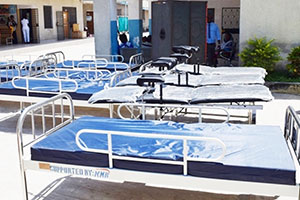
NMB (NATIONAL Microfinance Bank Plc) Supports Chamwino Health Centres ny donating medical equipment worth over 10m/- to Membe and Handali Health Centres in Chamwino District, Dodoma Region.

The donations were encouraged by the government prioritizing health of its citizens in its agenda, said NMB Central Zone Manager, Nsolo Mlozi.

Mlozi also stated saying “We are struggling to see into it that in our part of our Corporate Social Responsibilities (CSR), health institutions have enough medical equipment in their units.”
The Manager further said his bank has set aside one per cent of its income to accomodate local communities.

Handali Health Centre Doctor-in-Charge, Dr Enock Chitalasita, said the equipment would help about 7,376 residents from Handali, Mjelo, Chanhumba, Igandu, Nghahelezi, Miganga, Chinoje, Mgunga and Ndebwe villages to get reliable healthcare.

Dr Chitalasita further said his health institution also serves for the villages outside Mvumi Ward as far as other districts of Mpwapwa, Kongwa and Bahi.

However, Chamwino District Commissioner, Vumilia Nyamoga challenged the Health Centres’ managements to protect the equipment for the well being of the patients and other coming generations.

Vumilia Nyamoga thanked the bank for partnering with the government to help the local community.

CUBA to provide 13 medical experts for specialised services at the Bugando Medical Centre- Tanzania

CUBA has promised to maintain bilateral cooperation with Tanzania, besides agreeing to place 13 medical experts for specialised services at the Bugando Medical Centre (BMC).

The Cuban Ambassador to Tanzania, Prof Lucas Domingo Hernandez Polledo, said the two countries have enjoyed strong bilateral ties in history traced back to the founding fathers Julius Nyerere and Fidel Castro.

He also pointed out saying, “Cuba is glad to reclaim stable cooperation with Tanzania and the current spirit reminds us of the era of the two founding fathers and historical friends, Mwalimu Nyerere and Comrade Castro.
Our resumed relationship would be nourished in almost all beneficial sectors.”

He said the ancient relations between his country and Tanzania have been further joined by the recent decision by President John Magufuli, when he opened an embassy in Havana, adding that surely the gesture will further improve political and economic relations between us.

The Ambassador who was here for a number of official activities, among others, gave a visit to the BMC where the institution will soon receive about 13 Doctors and Nurses from Cuba to boost specialised medical services as areas with awful shortage of local experts.

Ambassador Polledo, said, Cuba has recorded impressive milestones in a number of sectors specially health and education, which it has been heavily investing since its independence.

He said Cuba with almost 11 million people has over 90,000 doctors, where one doctor serves about 3,000 people surpassing the ratio set by the World Health Organisation (WHO) of one to cater for 8,000 patients.
Whereas, Tanzania has one doctor serving around 20,000 people.

This will help Tanzania to improve their healthcare services.

Ethiopian medical doctors provide free medical service in Asmara

A group of Ethiopian doctors that consist of 35 newly graduates and 05 experienced doctors visited Asmara with an aim to provide free medical service.
The group is headed by Dr. Liya Tadesse, the Deputy Minister of Health of the Federal Democratic Republic of Ethiopia and other government officials.

Ms. Amina Nurhussen, Minister of Health, specified that the Governments of Eritrea and Ethiopia have agreed to work together in all sectors aimed at strengthening the existing peace and friendship cooperation and that the coming of the medical doctors attests to that.

Minister Amina added further added “in Eritrea the Ethiopian doctors will have the opportunity to work alongside Eritrean doctors and exchange experiences.”

The Ethiopian medical doctors will provide free medical service for two months in the referral hospitals of the Central, Anseba, Southern and Northern Red Sea regions.

Dr. Liya Tadesse said that the historic peace and friendship agreement reached between President Isaias Afwerki and Prime Minister Dr. Abiy Ahmed is the biggest gift to the peoples of the two countries. Dr. Liya stated that this first cooperation in the health sector serves to the developing good neighborliness and far sighted relation between the two countries.

Tanzania-first African country to acheive well-functioning regulatory system for medicines

The Tanzania Food and Drug authority (TFDA) has made tremendous improvements in recent years in ensuring medicines in the healthcare system are of good quality, safe and produce the planned health benefit.
According to the World Health Organization (WHO) Tanzania is the first well beleifed country in Africa to achieve a well-functioning, regulatory system for medical products.

Dr Matshidiso Moeti, WHO Regional Director for Africa said, “This is a major African milestone and we are very proud of Tanzania’s achievement, which we hope will inspire other countries in the region. With this step Tanzania makes a big step towards improving the quality of its health care services.”

It is important to have a successful regulatory systems that also serve to promote timely access to quality medicines as Medicines are used to prevent illnesses and treat diseases, helping many people to lead full and productive lives. However, if produced, stored or transported improperly or used incorrectly then medicines can be dangerous and can lead to hospitalization and even death.
WHO and African governments have raised efforts to support the capacity of regulating medicines in the region.
Over the past years WHO has been supporting African countries, including Tanzania to boost their regulatory organizations.

The benchmarking of Tanzanian regulatory authorities was carried out in levels by a WHO-led team of international experts.
Tanzania FDA met all indicators that define a maturity level 3 agency, the second highest on WHO’s scale and the target for regulatory systems worldwide

Tanzania FDA has come a long way to becoming a well known leader in medicines regulation in Africa
The latest achievement means that medical doctors, pharmacists, chemists and technicians working for the regulatory authority hold the expertise and hands-on skills to evaluate medical products, prevent and check associated hazards and are able of protecting the public from substandard and falsified medicines.